
OffRoad Drive Desert
LogicMiracleRacing
3.7101.00 Reviews
- Version
- 2.3
- Installs
- 10.00K
- Age Rating
- Everyone
Screenshots
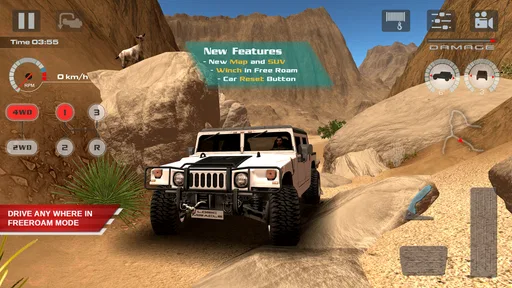
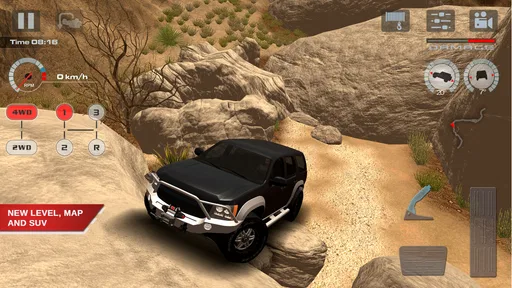
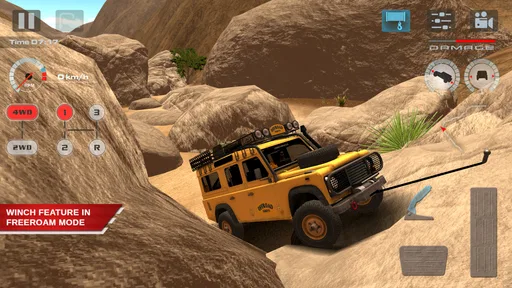
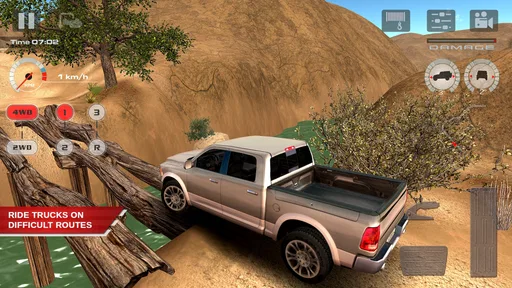
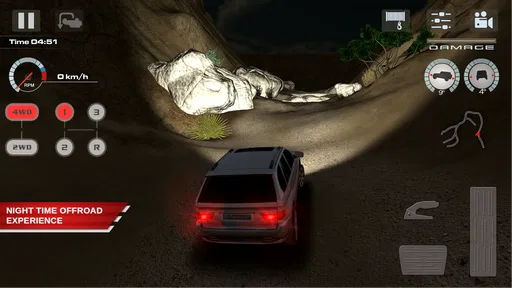
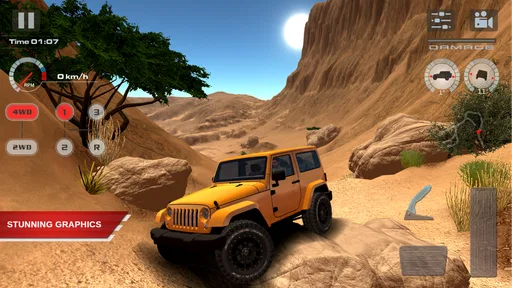
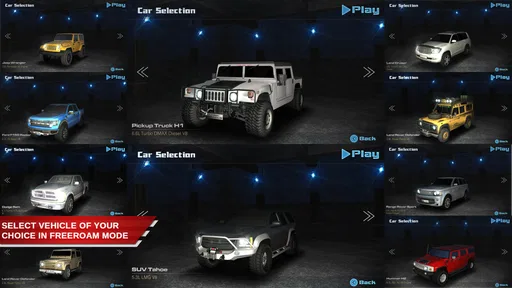
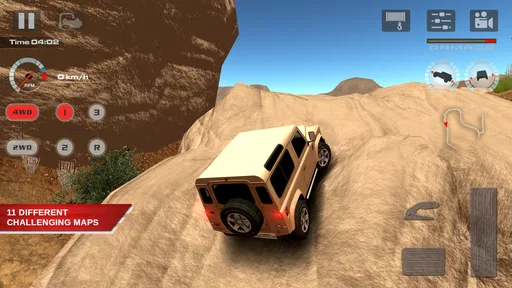
Our Review of OffRoad Drive Desert
 Analysis by Appyee
OffRoad Drive Desert is the kind of racing game I open when I want to drive rather than compete in a polished, traffic-heavy championship. It puts the focus on taking a 4x4 across rough desert terrain, where the satisfaction comes from keeping control over uneven ground instead of simply reaching a finish line at full speed. I found that difference important: this is less about memorizing a circuit and more about reading the surface, choosing a workable line, and recovering when the truck starts to lose its balance.
The game comes from LogicMiracle and sits in the racing category, although its appeal is closer to an off-road driving simulator than a conventional arcade racer. It is currently listed at $2.99, carries an Everyone age rating, and requires Android 6.0 or later. The store page shows a 3.7 average from around 1.7 thousand ratings, with more than 10 thousand installs. Those figures suggest a small, focused audience rather than a huge mainstream racing community, which matches my impression after spending time with it: this is a niche choice for people who enjoy the feel of difficult terrain.
Learning the desert before chasing progress
The first useful goal is not speed. It is learning how the truck reacts when the ground stops being predictable. On a normal road racer, I can often hold the accelerator down and correct with quick steering. Here, that habit works against me. A steep rise, dip, or uneven landing can turn a promising run into a slow recovery, so the early part of the experience is really about building a sense of restraint.
I recommend beginning with short, controlled inputs instead of immediately trying to cross every obstacle aggressively. Let the truck settle after a bump, steer before the front wheels reach a slope, and avoid treating the suspension as decoration. The physics are central to the game’s identity, and the suspension changes how safe a line feels. A route that looks direct may be worse than a wider approach if it leaves the vehicle tilted at the wrong moment.
That creates a more interesting opening goal than simply “drive fast.” I found myself trying to complete a section without a dramatic correction, then trying to repeat it with a cleaner line. This kind of self-improvement is especially appealing if you enjoy vehicle handling and terrain management. It is less satisfying if you expect immediate rewards, constant overtaking, or a clear parade of opponents.
A practical everyday scenario explains where the game fits. If I have a short break and want a quick, low-commitment driving session, I can use that time to practice one difficult stretch rather than needing to complete a long competitive event. The desert setting also gives the game a calmer rhythm than city racers packed with traffic and visual distractions. I can concentrate on the truck’s movement, though that calm can become repetition if I am not personally motivated by improving my technique.
What the early driving teaches
The most useful early lesson is to separate steering from acceleration. Turning while climbing or landing is much riskier than preparing the direction beforehand. I also found that recovering from a bad angle is often slower than avoiding it, so a cautious approach can be faster overall. That sounds simple, but it changes how I judge each section: I stop asking which route looks shortest and start asking which route leaves enough room to correct.
Another small but meaningful habit is to treat the vehicle’s momentum as something to manage, not something to maximize. A heavy push may carry the truck over a rise, but it can also make the next landing harder to control. When I reduced the urge to rush between obstacles, the driving became more deliberate and the physics became easier to read.
This is where the game’s real-physics pitch has practical value. The handling is not just a visual effect layered over a standard racer. The suspension and uneven ground make mistakes understandable: I can usually trace a failure to entering too quickly, choosing a poor angle, or correcting too late. That clarity is a strength because it gives each retry a purpose.
Progress signals without a crowded reward loop
OffRoad Drive Desert does not make its appeal depend on a constant stream of obvious distractions. The clearest progress signal is my own growing ability to handle the terrain. At first, a rough section feels like a collection of random bumps. After several attempts, I begin to recognize where the truck needs a slower approach, where momentum helps, and where a correction should happen before the wheels leave the ground.
That style of progress is subtle. Players who like unlocking vehicles, collecting upgrades, or watching a large career map expand may find it less compelling than a more conventional racing game. I would not choose this as my main game if visible progression systems were the reason I played. Its motivation comes from mastery and completion rather than from a heavily structured reward ladder.
There is still a useful sense of advancement in learning how to make a difficult route feel routine. The first clean crossing feels meaningful because it proves that I understood the terrain instead of surviving through luck. Repeating the same area also lets me test whether a change in approach really helped. That makes the game suitable for players who enjoy small mechanical improvements, but it requires patience from anyone looking for immediate unlocks.
I also appreciate that the desert itself acts as the main source of variety. In a standard track racer, a new event may differ through opponents, lap layouts, or vehicle statistics. Here, the challenge comes from the relationship between the truck and the surface. The trade-off is that the experience can feel narrower. Once I understand the basic handling, the game has to rely on the terrain and my willingness to refine runs rather than on a large collection of external rewards.
How the pacing affects motivation
The pacing is slower and more thoughtful than an arcade racer. There are moments when the vehicle moves steadily across open ground, followed by a section where every correction matters. I found that contrast helpful because it gives me time to reset my attention before the next technical stretch. It also means the game may feel uneventful when I am expecting nonstop action.
For a short session, the pacing works best when I set a personal target: reach a troublesome area without rolling, complete a section with fewer corrections, or find a safer line through an obstacle. Without a goal like that, the slower sections can feel like travel between challenges rather than meaningful play. The game does not need to be loud or fast, but it does ask me to supply some of the motivation myself.
This is one of the most important differences from the usual mobile racing alternative. Many free racers use rapid events, frequent rewards, and strong visual feedback to keep the player moving forward. OffRoad Drive Desert asks me to pay attention to handling instead. That makes it more appealing to a player who wants a focused driving toy and less suitable for someone who wants a broad progression campaign.
Difficulty, mistakes, and the cost of rushing
The difficulty curve feels tied to control rather than to artificial pressure. The game becomes harder when the terrain demands more precise positioning, not simply because the vehicle suddenly becomes weak or the clock becomes unreasonable. I prefer that approach because it keeps the challenge connected to my decisions. When I fail, I have something concrete to adjust on the next attempt.
Still, the learning curve can be unforgiving if I approach it like a regular racing game. Holding speed through every section produces unstable landings, and aggressive steering can make a small mistake grow quickly. The truck’s suspension gives the driving character, but it also means I cannot always rescue a bad approach with a last-second turn. That may frustrate players who want forgiving controls.
My best method was to divide a route into decisions rather than viewing it as one continuous drive. Before a difficult rise, I choose whether I need momentum or control. At the top, I prepare for the landing instead of waiting to see where the truck goes. After landing, I allow the vehicle to settle before making another major input. These steps sound obvious once explained, but applying them consistently is what makes the difficulty feel manageable.
There is also a trade-off between experimentation and efficiency. Taking a risky line can reveal a faster way through a section, but a conservative route is usually better while I am still learning. I would advise new players to value repeatable control first. Once a route feels stable, then experimentation becomes worthwhile because I can tell whether the risk improved the run or merely created another recovery problem.
Who will enjoy the challenge
This game is a good fit for someone who enjoys off-road handling, vehicle physics, and the satisfaction of mastering awkward terrain. It can also work for players who prefer solitary driving over head-to-head racing. The Everyone rating makes it broadly accessible in terms of content, but the handling itself may not suit every age or experience level; younger or casual players may need time to understand why speed is not always the answer.
I would skip it if my priority were realistic competition against other drivers, a deep garage, elaborate customization, or a long sequence of visibly staged rewards. I would also look elsewhere if I wanted a game that explains every objective through a strong career structure. This one is more appealing when the act of driving is the objective.
The $2.99 price also changes how I judge it. I am not expecting the same breadth as a large, continuously updated racing platform, and I would not recommend buying it for variety alone. I would consider it worthwhile for a specific interest in desert driving and physics-based control. If that interest is absent, the modest price will not solve the game’s narrower focus.
Does it keep me playing?
The retention pressure is gentle rather than aggressive. I do not feel pushed by a busy reward schedule; instead, I return because a particular section still feels unfinished in my hands. That can be refreshing. The game gives me room to play at my own pace, and a failed attempt usually encourages a different approach instead of making me feel that I have wasted a major event.
At the same time, this kind of retention depends heavily on personal taste. Players who need regular unlocks may stop playing once the novelty of the desert wears off. The game’s strongest loop is the cycle of attempt, mistake, adjustment, and cleaner attempt. It is a good loop, but it is not an all-purpose substitute for the broader systems found in larger racing games.
One non-obvious strength is how the physics turn repetition into analysis. I can use a failed run as a diagnostic tool: if the truck tips after a crest, I can change the entry speed; if it drifts wide on a slope, I can prepare the steering earlier; if it lands awkwardly, I can reconsider the approach rather than blaming the obstacle. That makes retries feel productive when I pay attention.
One limitation is that this same focus can expose the game’s narrow boundaries. Once I have learned the handling pattern of a section, there may be less reason to revisit it unless I enjoy chasing a cleaner personal performance. The game therefore rewards a patient player more than a collector. It is not trying to be a complete racing ecosystem, and I think expectations matter more here than raw feature count.
Using it comfortably on Android
Because the game requires Android 6.0 or newer, it remains accessible to a range of Android devices that are not running the latest software. I would still approach installation with realistic expectations: off-road physics and 3D terrain can make control feel more demanding on a smaller or less responsive screen than on a larger device. A short practice session is useful for deciding whether the steering feels precise enough for you.
I also recommend playing with a clear view of the vehicle and terrain rather than focusing only on the destination. The most important information is often the angle of the truck as it approaches a rise or landing. Watching that movement helps me make earlier corrections and reduces the temptation to react after the mistake has already happened.
The game’s Everyone rating makes it easier to consider for shared devices or family-friendly collections, but I would still explain the control style to a younger player. The challenge is not about inappropriate content; it is about understanding that careful driving may be more successful than fast driving. That distinction can make the first session either rewarding or confusing.
My progression verdict
After spending time with OffRoad Drive Desert, I see its progression as a skill curve rather than a conventional unlock curve. The early goal is learning the truck, the progress signal is cleaner control, the difficulty comes from increasingly demanding terrain, and the long-term motivation depends on whether I enjoy refining my own runs. That structure is coherent, but it is deliberately focused.
LogicMiracle has made a racing game for a particular mood: I want to concentrate on a 4x4, feel the suspension respond, and deal with the desert one section at a time. I like that it does not need constant traffic or exaggerated spectacle to create tension. A poorly judged approach can be more interesting than a straight sprint because the result comes from how I handled the ground.
My main reservation is that the game does not offer the broad progression appeal I associate with larger mobile racers. If I need frequent unlocks, competitive events, or a deep set of long-term goals, I would choose another option. If I want a compact off-road driving experience where mastering the terrain matters more than collecting rewards, this is much easier to recommend.
In the end, I would suggest it to a friend who enjoys patient driving games and does not mind supplying personal challenges. The 3.7 average reflects a mixed but respectable reception, and my view is similarly balanced: the handling concept is the reason to play, while the focused scope is the reason some players will move on. At $2.99, it makes sense as a targeted purchase for off-road fans, not as a replacement for every other racing game on Android.
My recommendation: choose it when you want desert terrain, suspension-focused driving, and a slower mastery loop. Skip it when your ideal racer is built around opponents, upgrades, constant rewards, or a large career structure. For the right player, the satisfaction comes from turning a difficult route into a controlled one, and that remains the game’s most convincing reason to keep driving.
Verdict
Strengths of OffRoad Drive Desert
- Realistic off-road physics make every climb and descent feel challenging.
- Large desert environments encourage exploration beyond the main objectives.
- A wide range of vehicles offers different handling styles and capabilities.
- Vehicle upgrades provide useful progression and improve performance over time.
- Offline play makes it suitable for gaming without a constant internet connection.
Limitations of OffRoad Drive Desert
- Controls can feel imprecise when making tight turns on uneven terrain.
- Some vehicles and upgrades may require considerable grinding to unlock.
- Graphics look dated on newer phones, especially at close range.
- Long sessions can become repetitive due to similar desert scenery.
- The game may drain battery quickly during extended driving sessions.
Other Releases by LogicMiracle
View All
OffRoad Drive Pro
Racing3.3
Similar Picks in This Category
View All
Hill Climb Racing
Fingersoft4.3

Dr. Driving
SUD Inc.4.2

Traffic Rider
skgames4.5

Asphalt 8 - Car Racing Game
Gameloft SE4.6

Race Master 3D: Car Racing
Beresnev Games4.6

Extreme Car Driving Simulator
AxesInMotion Racing4.3
Frequently Asked Questions
What is OffRoad Drive Desert?
OffRoad Drive Desert is an off-road driving game focused on exploring large desert environments with capable 4x4 vehicles. Instead of traditional racing on paved circuits, the game emphasizes navigating sand, rocky terrain, steep slopes, and other difficult surfaces. Players can drive across open areas, complete challenges, and test their control while dealing with the handling demands of off-road conditions.
How does the gameplay work in OffRoad Drive Desert?
The gameplay is based on vehicle exploration and off-road challenges rather than simple high-speed racing. You control a four-wheel-drive vehicle through desert landscapes, attempting to reach objectives and overcome natural obstacles. Careful steering, speed control, and choosing the right route are important, because driving too aggressively can make it harder to climb slopes or maintain control on uneven and sandy ground.
Can I play OffRoad Drive Desert offline?
OffRoad Drive Desert may be suitable for playing without a continuous internet connection, which makes it convenient for travel or areas with unreliable mobile data. However, some features can depend on the version installed, such as advertisements, updates, cloud services, or optional online functions. It is best to launch the game once while connected and check whether all desired modes and content remain available offline.
Is OffRoad Drive Desert suitable for beginners?
The game can be enjoyed by beginners, especially by players who like casual driving and exploration, but its off-road physics may require some practice. Desert surfaces and uneven terrain make the vehicles feel less predictable than cars in an ordinary racing game. New players should begin slowly, learn how the steering and acceleration respond, and avoid using maximum speed when approaching hills or rough ground.
Does OffRoad Drive Desert offer vehicle customization or upgrades?
The available vehicle options and upgrade features can vary depending on the specific release and device version. In general, the appeal comes from driving different off-road vehicles and improving your ability to handle demanding terrain, while some versions may include unlockable cars, visual changes, or performance-related progression. Before downloading, review the current store listing to confirm which vehicles and customization systems are included.
Play our best games!


